

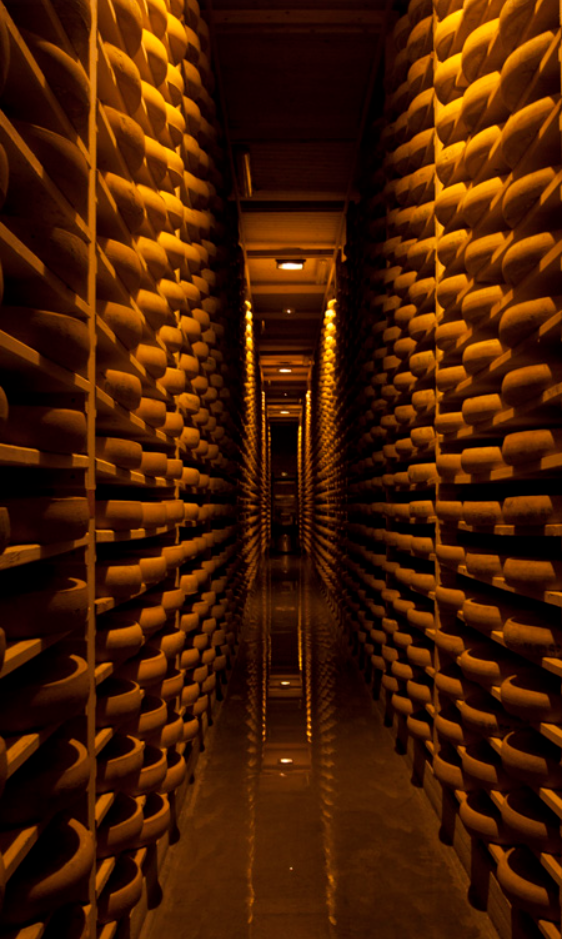
The modern part of the caves d’affinage (where they age the cheese) in Fort des Rousses. The old part is vaulted and it is where I filmed the short clip below that of Jean-Charles telling us about comté.
Earlier this summer, I was invited to comté country in the Jura Mountains to see how the cheese is made and to meet various experts including the supremely knowledgeable and charming Jean-Charles Arnaut who at any one time has 164,000 wheels of comté in his caves in a wonderful and vast Napoleonic fort, Fort des Rousses. Each wheel weighs about 40 kilograms and when I calculated the worth of his cheese hoard, it came up to over 60 million euros. I immediately proposed but he said he was happily married — some people marry for love, others for money; I never did either but you can guess which way I would have gone if I had chosen that path!
Jean-Charles explaining all about comté.
The caves d’affinage are both beautiful and slightly creepy. If I were a film maker. I would use them as a location for either a spoof of The Shining or a horror short!
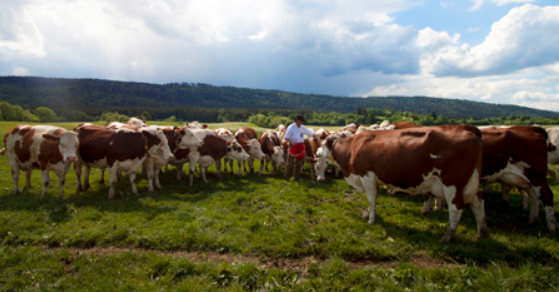
Anyhow, despite comté being one of my favourite hard cheeses, I realised that I didn’t know that much about it. For instance, I never knew that most of the milk (used raw) comes from montbeliarde cows; and that they are only allowed to feed on grass and wild flowers in summer and hay in winter.
But the eye-opening part of the trip was the tasting sessions, both pairing the cheese with wine including a vin jaune du Jura and tasting different comtés at different stages of ageing (from 6 to 18 months) and from different makers. The lady who organised the tasting session guided us through it making us taste the cheese the way we would taste wine (without the spitting of course!).
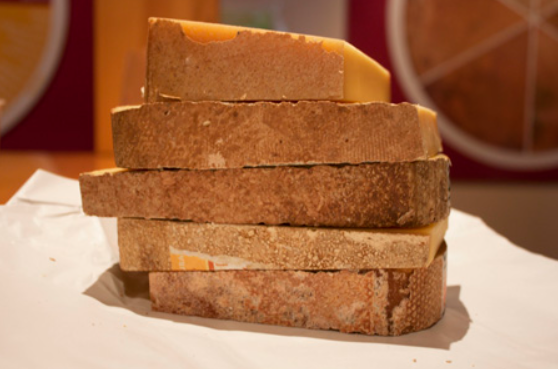
The cheeses we tasted; they were indeed very different. My favourite was an 18-month old but I cannot remember the maker’s name. It may be the same that is sold at Maltby Street by The Borough Cheese Co.
Comté actually starts out like many other cheeses with the milk churned with rennet until it curdles. The curds are then strained and pressed into huge wheels which are kept in the cheese maker’s cave for three to four weeks before being sent off to the affineur (the person who ages the cheese) and it is at that stage that it begins its life as comté AOP (appellation d’origine protégée).
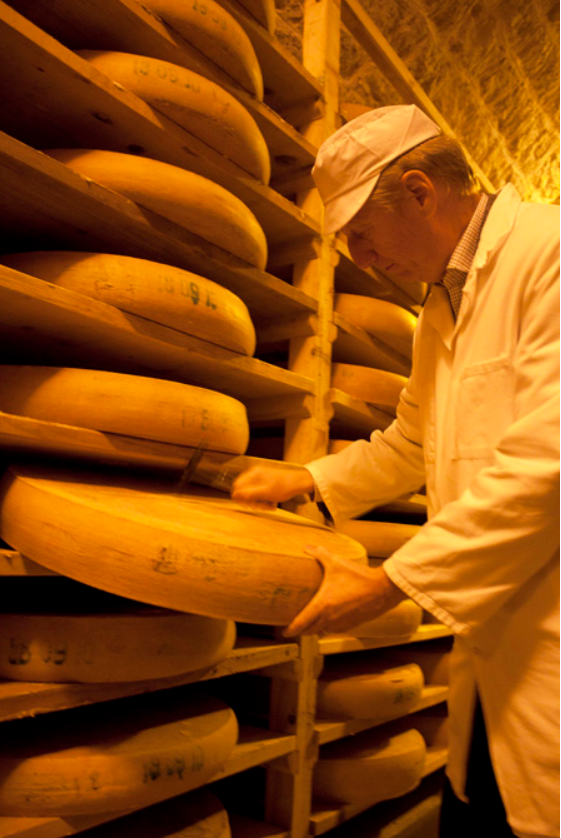
The affineur seems to be more important to the quality of the cheese than the maker although the latter is pretty important too. When we were there, we watched one maker discard wheels and wheels of comté. Something had gone slightly wrong and they were not good enough. Seemed like an awful waste although they weren’t going to be thrown away but used in processed food or sold grated. Things can also go wrong for the affineur who needs to be very present in his caves to make sure the cheeses are sprinkled with salt when they need to be — the salt penetrates the cheese this way and is not added when the cheese is made — that the wheels are turned when they need to be; that the humidity is kept at the right level which is very high (the floors were flooded with water when we visited; I think they are most of the time) and so on.
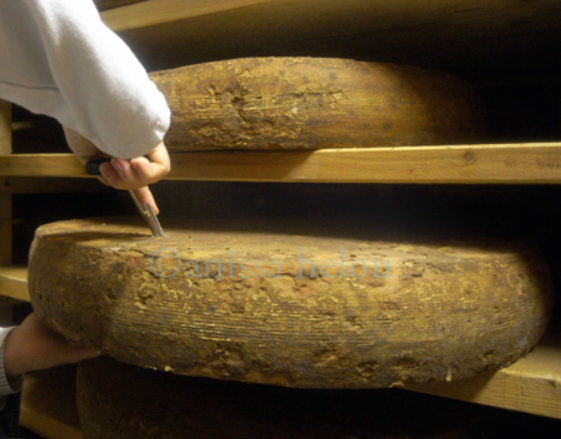
When I asked Jean-Charles if he aged any cheese longer than 18 months, he led us to another part of the caves where the cheeses had darker, more blistered crusts. He then took out of his pocket a narrow corer-like implement which he dug into a three-year old wheel to extract a piece of cheese. He gave us a taste each before he plugged the hole back with what remained of the piece. It is at that stage that he gave us another interesting tip by showing us how to taste the cheese at its most optimal: by squeezing and flattening it to warm it up.
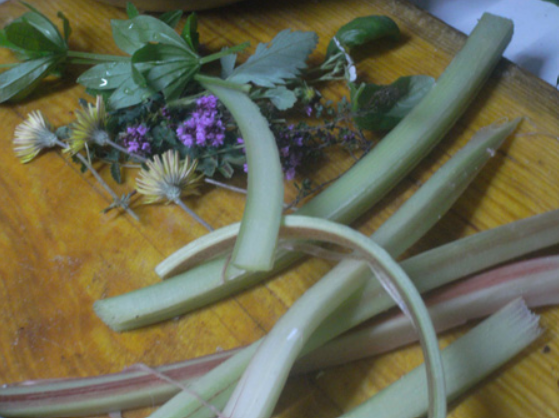
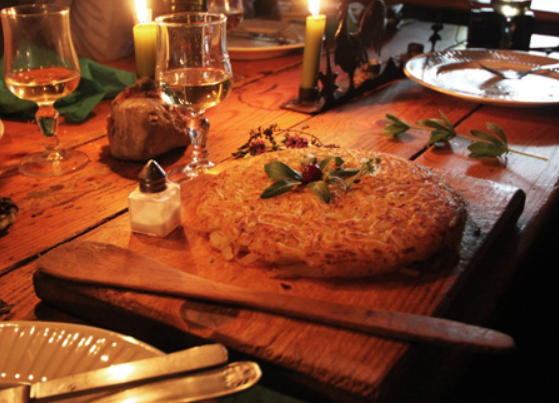
It was amazing to discover so much new stuff about a cheese that was so familiar. In fact, it was a particularly successful press trip which is not always the case. Not only because it was informative but also because our group was small and lovely and no one chewed gum (one of my pet hates). And after watching how the cheese is made and aged, we were taken to the most extraordinary mountain cabin in the middle of nowhere with no electricity or running water to have a comté fondue (the best), a delicious rusti and a great salad with herbs and flowers foraged nearby by our lovely host.
It was a perfect finish that reminded me of my childhood summers in Syria in my aunt’s house in Mashta el-Helou when it had no electricity or running water. She made her own butter and cheese but the cheese she made, shanklish, was fermented and tasted more like roquefort than comté!
Ps. You can find out more about the process of making comté in this wonderful post by David Lebovitz and in this one, David explains about ripening the cheese and tasting it. And if you read French, you can also go onto the comté website for more information. Also, all the unmarked pictures in this post were taken by Aled Evans.

