la stalla

10, June

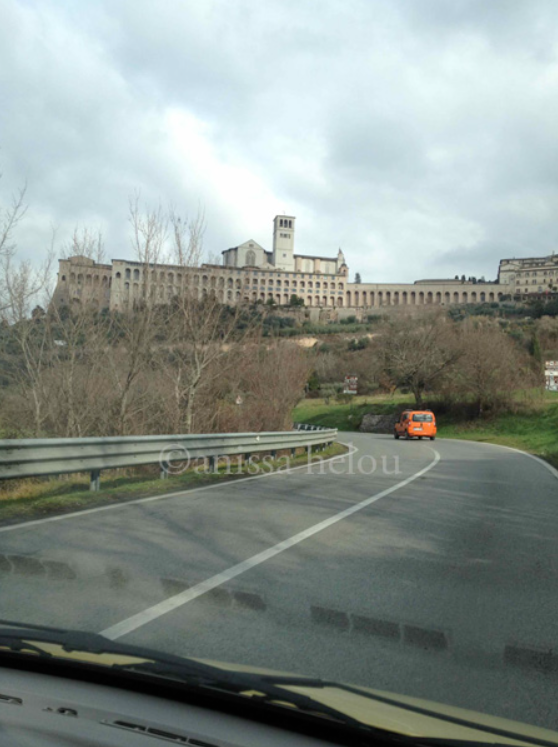
There aren’t many restaurants that I love to return to again and again but La Stalla near Assisi is one of them. For one, I love the drive to get there, through spectacular countryside with stunning views of Assisi. Then, there is the torta sul testo, an Umbrian flat bread from the province of Perugia which they still bake over a wood fire — it is a little like piadina but thicker and possibly drier.
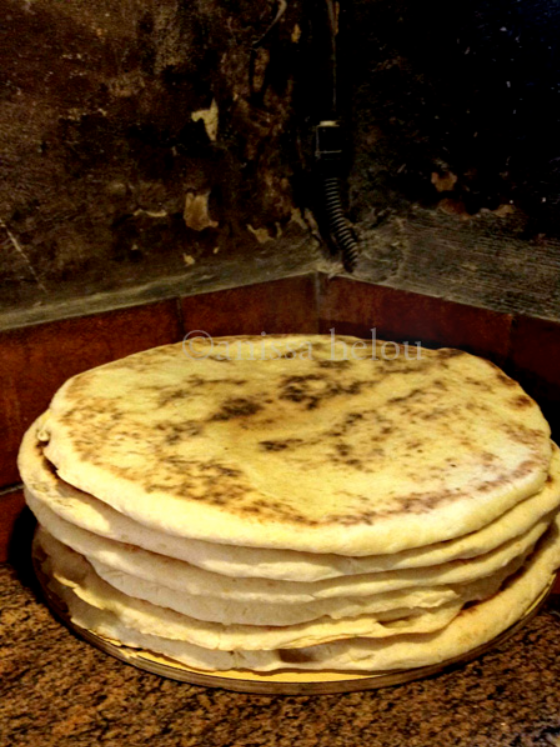
In fact, they do all their cooking in a huge fire place. The back part where they burn the wood is closed off by big metal doors. The wood burns down to charcoal which are then swept to the front where the grill is. One part of the grill where the heat is kept low is used for warming the torta sul testo while the other part where the heat is higher is used for grilling the various meats, sausages and potatoes. And if you sit in the first room, you can watch your meal, and everyone else’s for that matter, being cooked by large women dressed in white uniforms who look more like nurses’ than cooks’ and who don’t seem to mind the intense heat.
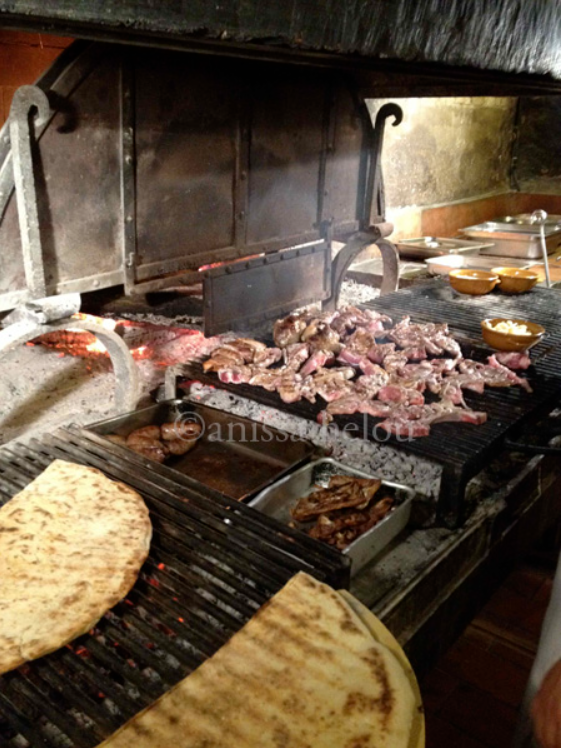
I always go there at least once for lunch when I visit my friend in Perugia and this time was the first time we shared a long communal table with three charming Italians — I hate communal tables except in Italy where everyone is so friendly and warm although I am not sure they eyed us as benevolently as we did. We were two and we ordered twice as much as the three of them did. I can recommend their pork ribs, lamb chops and of course the torta sul testo. I love the one filled with spinach and sausage and that filled with prosciutto or prosciutto and cheese. And I couldn’t resist at the end a plate of pig skins cooked with beans having seen my neighbours order one.
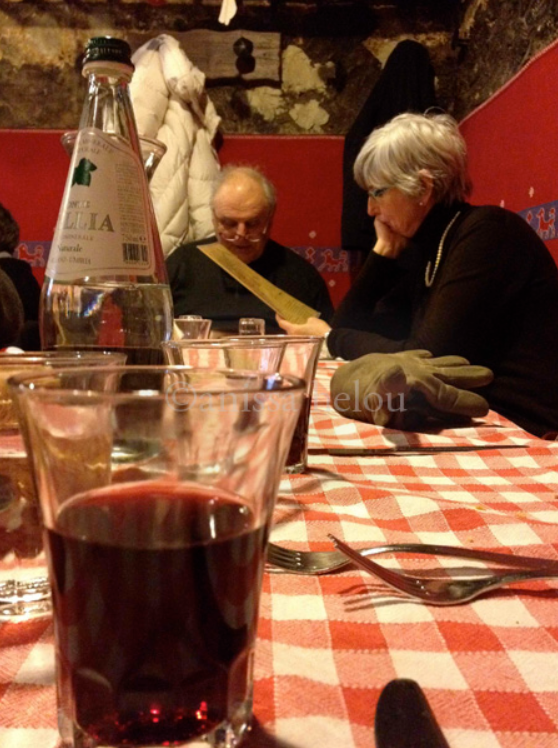
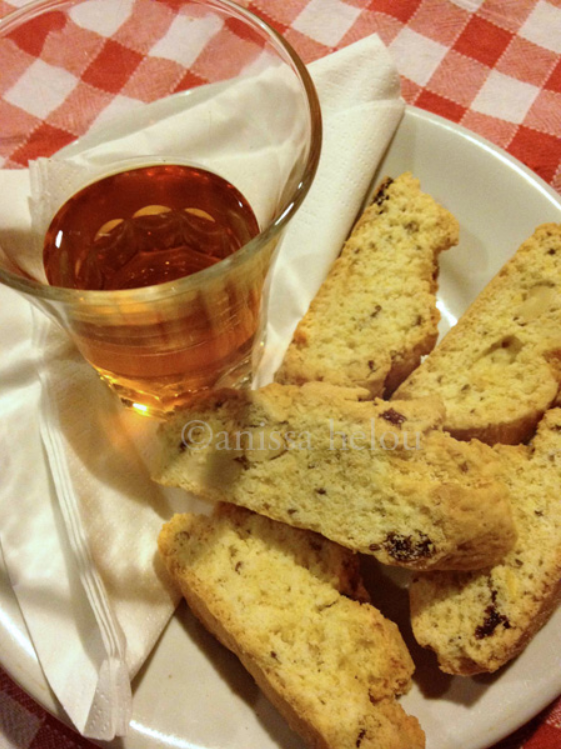
We finished with a few biscotti and a glass of vin santo. Not a very slimming lunch but the calories were definitely worth it. Totally delicious, from beginning to end, in a convivial and rather medieval atmosphere that added to the pleasure. The whole meal came to just under €50.00 which is amazing value considering how much more it would have been in London, that is if you can find such a place there!
La Stalla, Via Santuario delle Carceri, 24 Assisi PG, +39 75 81 36 36 (make sure you go to the bistrot part and not the restaurant, at least this is where I like to go).

And here is the recipe for piadina romagnola from Savory Baking from the Mediterranean. The main difference is that the torta has no fat in the dough, and it is thicker.

Piadina Romagnola

Piadina is traditionally cooked over a teglia or a testo (in which case it is know as torta al or sul testo). A testo is a flat, earthenware disk while a teglia is a cast iron griddle. Usually, either of these are placed over an open fire to cook the piadina and as a result, the bread has a slightly smoky taste. However, you can just as easily use a cast iron frying pan, a smooth griddle or even a non-stick pan and heat either over a gas or electric fire to produce very good results except for the smoky flavor. Makes 6

500 g unbleached all-purpose flour, plus extra for kneading and shaping

1 1/2 teaspoons fine sea salt

1 teaspoon baking soda

2 tablespoons lard or extra virgin olive oil

1 cup whole milk

Mix the flour, salt and baking soda in a large mixing bowl. Make a well in the centre. Add the lard to the well and, with the tips of your fingers, rub into the flour until well incorporated.

Gradually add the milk and mix with the flour until you have a rough ball of dough.

Remove the dough onto your work surface. Knead for about 2-3 minutes. You don’t want to develop the gluten too much as piadina is supposed to be slightly crumbly.

Divide the dough into 6 equal pieces and shape into balls. Cover with a wet, although not dripping kitchen towel.

Place a cast iron frying pan on medium high heat.

While the pan is heating, roll out one ball of dough to an 8 inch disk. When the pan is really hot, lay the disk of dough on it. Using a fork, prick it in a few places. Cook for 2 minutes, or until there are golden spots on the bottom. Turn the piadina over and cook for another 2 minutes. Remove onto a cloth and cover while you make the other piadine, rolling them out and cooking them as with the first one. Stack them up in between layers of cloth. Serve hot or warm, filled with slices of prosciutto, salame, cheese, or cooked sausages (salsiccie). You can either fold the piadina over the filling or roll the bread around it.

Share:

Comments

Leave the first comment

<!-- if comments are disabled for this post then hide comments container -->
<style> 
<?php if(!comments_open()) { echo "#nfps-comments-container {display: none !important;}"; }?>
</style>

la stalla

10, June

There aren’t many restaurants that I love to return to again and again but La Stalla near Assisi is one of them. For one, I love the drive to get there, through spectacular countryside with stunning views of Assisi. Then, there is the torta sul testo, an Umbrian flat bread from the province of Perugia which they still bake over a wood fire — it is a little like piadina but thicker and possibly drier.

In fact, they do all their cooking in a huge fire place. The back part where they burn the wood is closed off by big metal doors. The wood burns down to charcoal which are then swept to the front where the grill is. One part of the grill where the heat is kept low is used for warming the torta sul testo while the other part where the heat is higher is used for grilling the various meats, sausages and potatoes. And if you sit in the first room, you can watch your meal, and everyone else’s for that matter, being cooked by large women dressed in white uniforms who look more like nurses’ than cooks’ and who don’t seem to mind the intense heat.

I always go there at least once for lunch when I visit my friend in Perugia and this time was the first time we shared a long communal table with three charming Italians — I hate communal tables except in Italy where everyone is so friendly and warm although I am not sure they eyed us as benevolently as we did. We were two and we ordered twice as much as the three of them did. I can recommend their pork ribs, lamb chops and of course the torta sul testo. I love the one filled with spinach and sausage and that filled with prosciutto or prosciutto and cheese. And I couldn’t resist at the end a plate of pig skins cooked with beans having seen my neighbours order one.

We finished with a few biscotti and a glass of vin santo. Not a very slimming lunch but the calories were definitely worth it. Totally delicious, from beginning to end, in a convivial and rather medieval atmosphere that added to the pleasure. The whole meal came to just under €50.00 which is amazing value considering how much more it would have been in London, that is if you can find such a place there!

La Stalla, Via Santuario delle Carceri, 24 Assisi PG, +39 75 81 36 36 (make sure you go to the bistrot part and not the restaurant, at least this is where I like to go).

And here is the recipe for piadina romagnola from Savory Baking from the Mediterranean. The main difference is that the torta has no fat in the dough, and it is thicker.

Piadina Romagnola

Piadina is traditionally cooked over a teglia or a testo (in which case it is know as torta al or sul testo). A testo is a flat, earthenware disk while a teglia is a cast iron griddle. Usually, either of these are placed over an open fire to cook the piadina and as a result, the bread has a slightly smoky taste. However, you can just as easily use a cast iron frying pan, a smooth griddle or even a non-stick pan and heat either over a gas or electric fire to produce very good results except for the smoky flavor. Makes 6

500 g unbleached all-purpose flour, plus extra for kneading and shaping

1 1/2 teaspoons fine sea salt

1 teaspoon baking soda

2 tablespoons lard or extra virgin olive oil

1 cup whole milk

Mix the flour, salt and baking soda in a large mixing bowl. Make a well in the centre. Add the lard to the well and, with the tips of your fingers, rub into the flour until well incorporated.

Gradually add the milk and mix with the flour until you have a rough ball of dough.

Remove the dough onto your work surface. Knead for about 2-3 minutes. You don’t want to develop the gluten too much as piadina is supposed to be slightly crumbly.

Divide the dough into 6 equal pieces and shape into balls. Cover with a wet, although not dripping kitchen towel.

Place a cast iron frying pan on medium high heat.

While the pan is heating, roll out one ball of dough to an 8 inch disk. When the pan is really hot, lay the disk of dough on it. Using a fork, prick it in a few places. Cook for 2 minutes, or until there are golden spots on the bottom. Turn the piadina over and cook for another 2 minutes. Remove onto a cloth and cover while you make the other piadine, rolling them out and cooking them as with the first one. Stack them up in between layers of cloth. Serve hot or warm, filled with slices of prosciutto, salame, cheese, or cooked sausages (salsiccie). You can either fold the piadina over the filling or roll the bread around it.

Share:

Comments

Leave the first comment

<!-- if comments are disabled for this post then hide comments container -->
<style> 
<?php if(!comments_open()) { echo "#nfps-comments-container {display: none !important;}"; }?>
</style>

la stalla

10, June

There aren’t many restaurants that I love to return to again and again but La Stalla near Assisi is one of them. For one, I love the drive to get there, through spectacular countryside with stunning views of Assisi. Then, there is the torta sul testo, an Umbrian flat bread from the province of Perugia which they still bake over a wood fire — it is a little like piadina but thicker and possibly drier.

In fact, they do all their cooking in a huge fire place. The back part where they burn the wood is closed off by big metal doors. The wood burns down to charcoal which are then swept to the front where the grill is. One part of the grill where the heat is kept low is used for warming the torta sul testo while the other part where the heat is higher is used for grilling the various meats, sausages and potatoes. And if you sit in the first room, you can watch your meal, and everyone else’s for that matter, being cooked by large women dressed in white uniforms who look more like nurses’ than cooks’ and who don’t seem to mind the intense heat.

I always go there at least once for lunch when I visit my friend in Perugia and this time was the first time we shared a long communal table with three charming Italians — I hate communal tables except in Italy where everyone is so friendly and warm although I am not sure they eyed us as benevolently as we did. We were two and we ordered twice as much as the three of them did. I can recommend their pork ribs, lamb chops and of course the torta sul testo. I love the one filled with spinach and sausage and that filled with prosciutto or prosciutto and cheese. And I couldn’t resist at the end a plate of pig skins cooked with beans having seen my neighbours order one.

We finished with a few biscotti and a glass of vin santo. Not a very slimming lunch but the calories were definitely worth it. Totally delicious, from beginning to end, in a convivial and rather medieval atmosphere that added to the pleasure. The whole meal came to just under €50.00 which is amazing value considering how much more it would have been in London, that is if you can find such a place there!

La Stalla, Via Santuario delle Carceri, 24 Assisi PG, +39 75 81 36 36 (make sure you go to the bistrot part and not the restaurant, at least this is where I like to go).

And here is the recipe for piadina romagnola from Savory Baking from the Mediterranean. The main difference is that the torta has no fat in the dough, and it is thicker.

Piadina Romagnola

Piadina is traditionally cooked over a teglia or a testo (in which case it is know as torta al or sul testo). A testo is a flat, earthenware disk while a teglia is a cast iron griddle. Usually, either of these are placed over an open fire to cook the piadina and as a result, the bread has a slightly smoky taste. However, you can just as easily use a cast iron frying pan, a smooth griddle or even a non-stick pan and heat either over a gas or electric fire to produce very good results except for the smoky flavor. Makes 6

500 g unbleached all-purpose flour, plus extra for kneading and shaping

1 1/2 teaspoons fine sea salt

1 teaspoon baking soda

2 tablespoons lard or extra virgin olive oil

1 cup whole milk

Mix the flour, salt and baking soda in a large mixing bowl. Make a well in the centre. Add the lard to the well and, with the tips of your fingers, rub into the flour until well incorporated.

Gradually add the milk and mix with the flour until you have a rough ball of dough.

Remove the dough onto your work surface. Knead for about 2-3 minutes. You don’t want to develop the gluten too much as piadina is supposed to be slightly crumbly.

Divide the dough into 6 equal pieces and shape into balls. Cover with a wet, although not dripping kitchen towel.

Place a cast iron frying pan on medium high heat.

While the pan is heating, roll out one ball of dough to an 8 inch disk. When the pan is really hot, lay the disk of dough on it. Using a fork, prick it in a few places. Cook for 2 minutes, or until there are golden spots on the bottom. Turn the piadina over and cook for another 2 minutes. Remove onto a cloth and cover while you make the other piadine, rolling them out and cooking them as with the first one. Stack them up in between layers of cloth. Serve hot or warm, filled with slices of prosciutto, salame, cheese, or cooked sausages (salsiccie). You can either fold the piadina over the filling or roll the bread around it.

Share:

Comments

Leave the first comment

<!-- if comments are disabled for this post then hide comments container -->
<style> 
<?php if(!comments_open()) { echo "#nfps-comments-container {display: none !important;}"; }?>
</style>