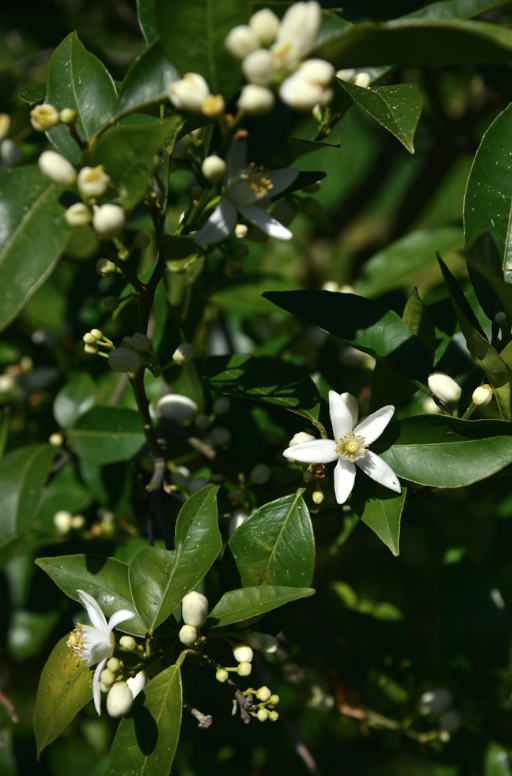
Orange Blossom Jam

28, May

It was lucky I rented my little Sicilian casetta during orange blossom season. I had included a recipe for the jam in the book I am working on right now and was wondering how I was going to test it. Well, I didn’t have to wonder too long as I walked with Mary through her citrus grove and found the trees bursting with blossom. All I had to do was decide which of the blossom were the right ones for the jam — some were small and others large and fleshy. Thinking back to the orange blossom jam of the Lebanese sweet-makers, I decided to go for the fleshier kind and the next day, Amy and I went down early in the morning to pick 1 kilogram of blossom, which was the quantity I needed for the recipe. We quickly realised that if we were to pick so much, we would be spending the rest of our week making the jam. Not only would it have taken forever to pick the blossom — the flowers are surprisingly light — but we would have had to spend hours picking the petals off them. So, I decided to cut down the recipe to a quarter of the quantities and after a good half hour at least, we had picked what we needed.
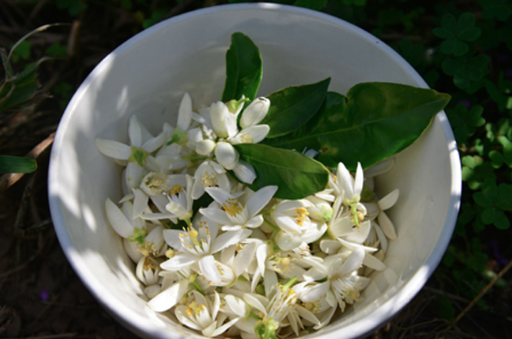
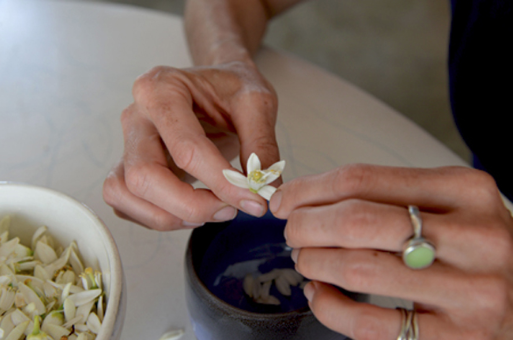
Here is what I picked. Amy was faster than me and her bowl was fuller. You can imagine the work we had ahead of us, pulling the petals one by one but we did it. I can’t remember how long it took. It must have been a good two hours and here is a shot of Amy’s beautiful hands delicately prising each petal off the flower.
Once we had all our petals, we needed to soak them. I will not give you the recipe here. For that, you will have to wait for the book to come out but I will explain the process and of course you have the pictures which may help you work out the process for yourself! All I can tell you is that you need to plan your time carefully before embarking on this adventure. And I now understand why you see this jam less and less in Lebanon. When I lived there, all the sweetmakers used it to garnish their creamy sweets but no longer. Labour must have been a lot cheaper in those days.
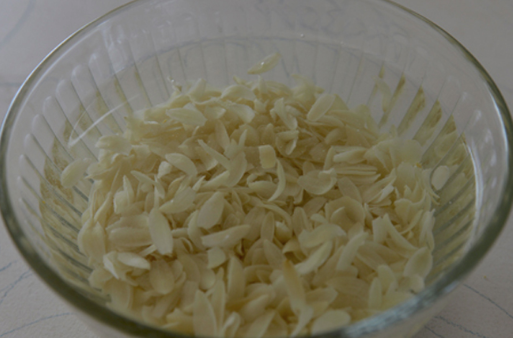
Anyhow, after the petals had soaked for the length of time required, we needed to boil them then soak them again. I guess all this soaking and boiling must be to both soften them and take away a certain bitterness or perhaps make them more palatable. I still have to research that bit of the recipe.
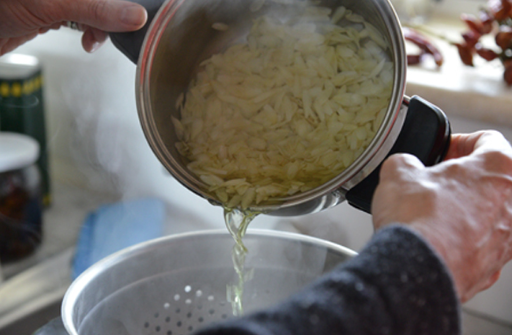
We then had to make a sugar syrup which Lebanese sweetmakers colour red. I tried to get a natural dye like hibiscus but couldn’t find any dried, so, we resorted to artificial colouring but decided to use less given how unwholesome it is. It was the right decision. The colour of our orange blossom jam may not have been as vivid as that I remembered but it was incredibly pretty although we wondered until the very end whether the petals would colour the way they should. They didn’t as they cooked in the syrup as you can see from the picture below.
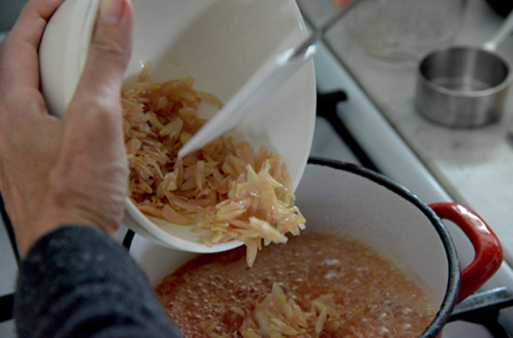
And they were still not the right colour as we left them to soak in the syrup.
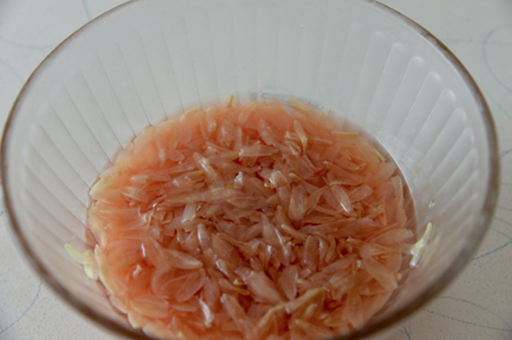
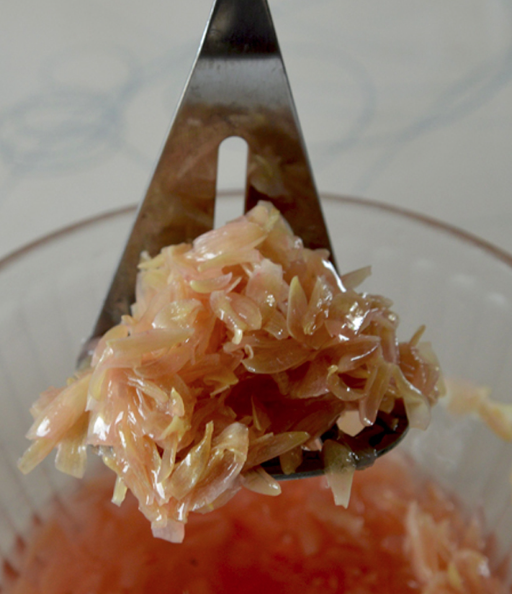
They only started turning pink at the second cooking in the syrup

alcamo-orange blossom-end 2 copy

We were so proud, and I was so thrilled that the recipe had worked even if I had never made it before nor seen anyone make it. My mother must have been a wise cook, deciding to use her time more usefully than to spend days making this jam. To be truthful, I don’t think many homecooks make it. It really is the reserve of sweetmakers. We decided to give the pot of jam to Mary but we couldn’t resist having some the next day for breakfast and wonderful Amy decided to have some on grapefruit segments — we also picked the grapefruit.

And here is what our jam looked like served. The prettiest bowl of grapefruit segments you’ve ever seen.

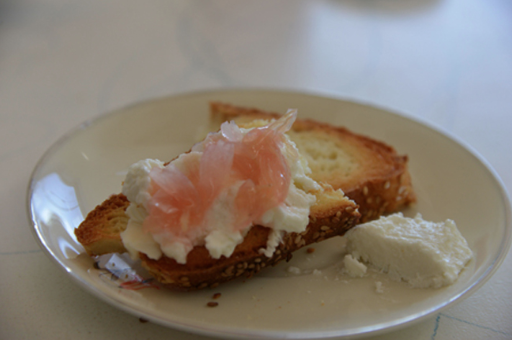
Then we thought we would try some on ricotta cheese with our wonderful Sicilian bread from Spiga d’Oro. By the time we’d finished breakfast, Mary’s pot had reduced by half. It was just irresistible, both to look at and eat. Mary didn’t mind. As for the recipe, I will let you know when the book comes out. Hopefully it will be in the spring when the blossom is in season!

Share:

Comments

Leave the first comment

<!-- if comments are disabled for this post then hide comments container -->
<style> 
<?php if(!comments_open()) { echo "#nfps-comments-container {display: none !important;}"; }?>
</style>

Orange Blossom Jam

28, May

It was lucky I rented my little Sicilian casetta during orange blossom season. I had included a recipe for the jam in the book I am working on right now and was wondering how I was going to test it. Well, I didn’t have to wonder too long as I walked with Mary through her citrus grove and found the trees bursting with blossom. All I had to do was decide which of the blossom were the right ones for the jam — some were small and others large and fleshy. Thinking back to the orange blossom jam of the Lebanese sweet-makers, I decided to go for the fleshier kind and the next day, Amy and I went down early in the morning to pick 1 kilogram of blossom, which was the quantity I needed for the recipe. We quickly realised that if we were to pick so much, we would be spending the rest of our week making the jam. Not only would it have taken forever to pick the blossom — the flowers are surprisingly light — but we would have had to spend hours picking the petals off them. So, I decided to cut down the recipe to a quarter of the quantities and after a good half hour at least, we had picked what we needed.

Here is what I picked. Amy was faster than me and her bowl was fuller. You can imagine the work we had ahead of us, pulling the petals one by one but we did it. I can’t remember how long it took. It must have been a good two hours and here is a shot of Amy’s beautiful hands delicately prising each petal off the flower.

Once we had all our petals, we needed to soak them. I will not give you the recipe here. For that, you will have to wait for the book to come out but I will explain the process and of course you have the pictures which may help you work out the process for yourself! All I can tell you is that you need to plan your time carefully before embarking on this adventure. And I now understand why you see this jam less and less in Lebanon. When I lived there, all the sweetmakers used it to garnish their creamy sweets but no longer. Labour must have been a lot cheaper in those days.

Anyhow, after the petals had soaked for the length of time required, we needed to boil them then soak them again. I guess all this soaking and boiling must be to both soften them and take away a certain bitterness or perhaps make them more palatable. I still have to research that bit of the recipe.

We then had to make a sugar syrup which Lebanese sweetmakers colour red. I tried to get a natural dye like hibiscus but couldn’t find any dried, so, we resorted to artificial colouring but decided to use less given how unwholesome it is. It was the right decision. The colour of our orange blossom jam may not have been as vivid as that I remembered but it was incredibly pretty although we wondered until the very end whether the petals would colour the way they should. They didn’t as they cooked in the syrup as you can see from the picture below.

And they were still not the right colour as we left them to soak in the syrup.

They only started turning pink at the second cooking in the syrup
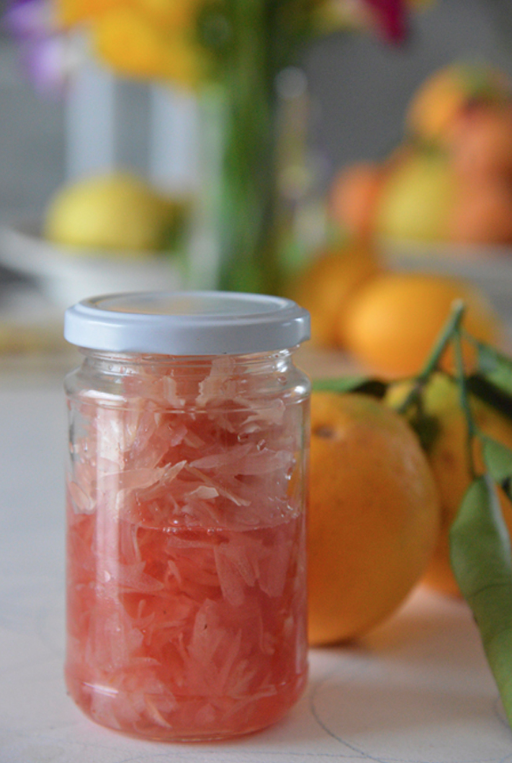
alcamo-orange blossom-end 2 copy

We were so proud, and I was so thrilled that the recipe had worked even if I had never made it before nor seen anyone make it. My mother must have been a wise cook, deciding to use her time more usefully than to spend days making this jam. To be truthful, I don’t think many homecooks make it. It really is the reserve of sweetmakers. We decided to give the pot of jam to Mary but we couldn’t resist having some the next day for breakfast and wonderful Amy decided to have some on grapefruit segments — we also picked the grapefruit.
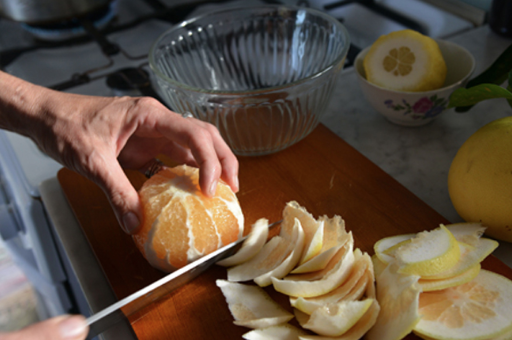
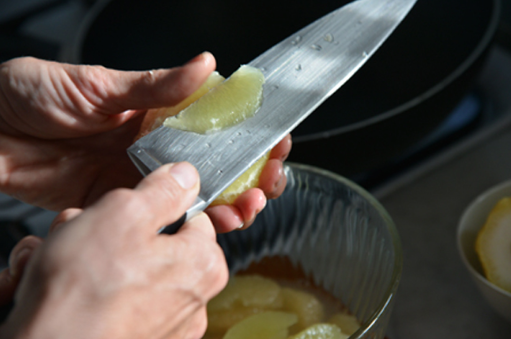
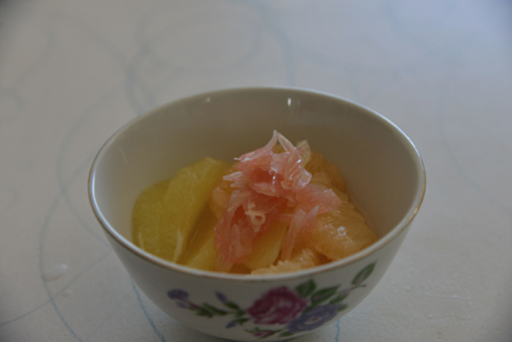
And here is what our jam looked like served. The prettiest bowl of grapefruit segments you’ve ever seen.
Then we thought we would try some on ricotta cheese with our wonderful Sicilian bread from Spiga d’Oro. By the time we’d finished breakfast, Mary’s pot had reduced by half. It was just irresistible, both to look at and eat. Mary didn’t mind. As for the recipe, I will let you know when the book comes out. Hopefully it will be in the spring when the blossom is in season!
Share:

Comments

Leave the first comment

<!-- if comments are disabled for this post then hide comments container -->
<style> 
<?php if(!comments_open()) { echo "#nfps-comments-container {display: none !important;}"; }?>
</style>

Orange Blossom Jam

28, May

It was lucky I rented my little Sicilian casetta during orange blossom season. I had included a recipe for the jam in the book I am working on right now and was wondering how I was going to test it. Well, I didn’t have to wonder too long as I walked with Mary through her citrus grove and found the trees bursting with blossom. All I had to do was decide which of the blossom were the right ones for the jam — some were small and others large and fleshy. Thinking back to the orange blossom jam of the Lebanese sweet-makers, I decided to go for the fleshier kind and the next day, Amy and I went down early in the morning to pick 1 kilogram of blossom, which was the quantity I needed for the recipe. We quickly realised that if we were to pick so much, we would be spending the rest of our week making the jam. Not only would it have taken forever to pick the blossom — the flowers are surprisingly light — but we would have had to spend hours picking the petals off them. So, I decided to cut down the recipe to a quarter of the quantities and after a good half hour at least, we had picked what we needed.

Here is what I picked. Amy was faster than me and her bowl was fuller. You can imagine the work we had ahead of us, pulling the petals one by one but we did it. I can’t remember how long it took. It must have been a good two hours and here is a shot of Amy’s beautiful hands delicately prising each petal off the flower.

Once we had all our petals, we needed to soak them. I will not give you the recipe here. For that, you will have to wait for the book to come out but I will explain the process and of course you have the pictures which may help you work out the process for yourself! All I can tell you is that you need to plan your time carefully before embarking on this adventure. And I now understand why you see this jam less and less in Lebanon. When I lived there, all the sweetmakers used it to garnish their creamy sweets but no longer. Labour must have been a lot cheaper in those days.

Anyhow, after the petals had soaked for the length of time required, we needed to boil them then soak them again. I guess all this soaking and boiling must be to both soften them and take away a certain bitterness or perhaps make them more palatable. I still have to research that bit of the recipe.

We then had to make a sugar syrup which Lebanese sweetmakers colour red. I tried to get a natural dye like hibiscus but couldn’t find any dried, so, we resorted to artificial colouring but decided to use less given how unwholesome it is. It was the right decision. The colour of our orange blossom jam may not have been as vivid as that I remembered but it was incredibly pretty although we wondered until the very end whether the petals would colour the way they should. They didn’t as they cooked in the syrup as you can see from the picture below.

And they were still not the right colour as we left them to soak in the syrup.

They only started turning pink at the second cooking in the syrup

alcamo-orange blossom-end 2 copy

We were so proud, and I was so thrilled that the recipe had worked even if I had never made it before nor seen anyone make it. My mother must have been a wise cook, deciding to use her time more usefully than to spend days making this jam. To be truthful, I don’t think many homecooks make it. It really is the reserve of sweetmakers. We decided to give the pot of jam to Mary but we couldn’t resist having some the next day for breakfast and wonderful Amy decided to have some on grapefruit segments — we also picked the grapefruit.

And here is what our jam looked like served. The prettiest bowl of grapefruit segments you’ve ever seen.

Then we thought we would try some on ricotta cheese with our wonderful Sicilian bread from Spiga d’Oro. By the time we’d finished breakfast, Mary’s pot had reduced by half. It was just irresistible, both to look at and eat. Mary didn’t mind. As for the recipe, I will let you know when the book comes out. Hopefully it will be in the spring when the blossom is in season!

Share:

Comments

Leave the first comment

<!-- if comments are disabled for this post then hide comments container -->
<style> 
<?php if(!comments_open()) { echo "#nfps-comments-container {display: none !important;}"; }?>
</style>