Cairo, the City of Bread

28, May

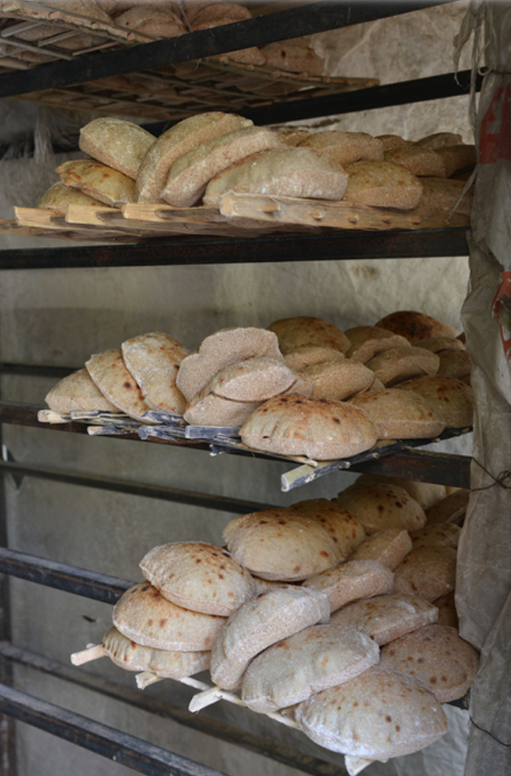
If there is one food that is essential to most Arabs, it is bread and nowhere is it more essential than in Cairo which I like to call the city of bread. Wherever you go, you will see bread being baked, or sold, or consumed or simply carried home a little like the ubiquitous French baguette, except that in Egypt it is aysh baladi or shami that is the national loaf. Aysh means life indicating the importance of bread — elsewhere in the Arab world bread is called khobz — while baladi means local; it describes bread made with wholewheat flour while shami which means Levantine describes bread made with regular white flour.

cairo-aysh baladi 5 copy

And unlike Lebanon or Syria where bread is almost always packed in plastic bags once it has cooled to keep it soft, most of the bread in Cairo is left uncovered whether it is stacked in bakeries ready to be taken to shops or restaurants like in the top picture or being sold on the street as in the picture below. This is because it is a lot thicker and as a result it does not dry quickly. And Cairo is the only place I know where bread is carried around in beautiful wooden cages or on gorgeous wooden grills. I wondered if I would still see them when I went to Cairo a few weeks ago after not having been for about 10 years but I did; and I was thrilled to see that nothing had changed, at least on that front!

cairo-more bread for sale copy

And because bread is revered, no street vendor or restaurant waiter would dream of rationing how much of it you can have with your meal or worse, making you pay extra for it as sometimes happens in the west. They will start you off with a few loaves and give you more if they notice that you have finished what is on your table.

cairo-ful for breakfast copy
cairo-left over of a ful & ta'miyah meal copy

This diner actually ended up leaving much of his bread as well as some of his ta’miyah (or falafel) but bread is never allowed to go to waste although I had never seen a cart full of stale bread like that in the picture below. I had to run to snap it and when I asked our lovely driver where it was going, he explained that the bread was being taken to the mill for it to be ground and mixed with animal feed. Ingenious. I wish we had such a service here.

cairo-stale bread 2 copy

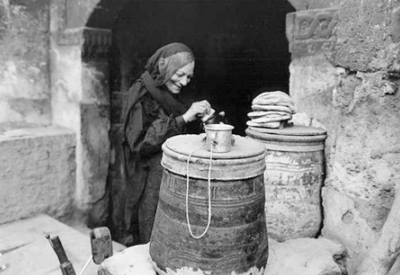
Another sight that has always appealed to me on the streets of Cairo is people and the bread they have just bought. For my Mediterranean Street Food book, I had captured a wonderful old woman who had stopped by a medieval doorway to take a drink from water jars placed by it — you see these jars dotted around old Cairo for people to quench their thirst as they walk about their business. She had rested her just bought stack of bread on the lid of one of the jars. And on this trip, I came across this delightful grandmother resting on a stone ledge with her grandson on her lap and her daily bread by her side. I loved her and I loved her cool plastic shoes. I wonder if they could become a fashion item here!

cairo-old woman-grandson & bread copy

Share:

Comments

Leave the first comment

<!-- if comments are disabled for this post then hide comments container -->
<style> 
<?php if(!comments_open()) { echo "#nfps-comments-container {display: none !important;}"; }?>
</style>

Cairo, the City of Bread

28, May

If there is one food that is essential to most Arabs, it is bread and nowhere is it more essential than in Cairo which I like to call the city of bread. Wherever you go, you will see bread being baked, or sold, or consumed or simply carried home a little like the ubiquitous French baguette, except that in Egypt it is aysh baladi or shami that is the national loaf. Aysh means life indicating the importance of bread — elsewhere in the Arab world bread is called khobz — while baladi means local; it describes bread made with wholewheat flour while shami which means Levantine describes bread made with regular white flour.

cairo-aysh baladi 5 copy

And unlike Lebanon or Syria where bread is almost always packed in plastic bags once it has cooled to keep it soft, most of the bread in Cairo is left uncovered whether it is stacked in bakeries ready to be taken to shops or restaurants like in the top picture or being sold on the street as in the picture below. This is because it is a lot thicker and as a result it does not dry quickly. And Cairo is the only place I know where bread is carried around in beautiful wooden cages or on gorgeous wooden grills. I wondered if I would still see them when I went to Cairo a few weeks ago after not having been for about 10 years but I did; and I was thrilled to see that nothing had changed, at least on that front!

cairo-more bread for sale copy

And because bread is revered, no street vendor or restaurant waiter would dream of rationing how much of it you can have with your meal or worse, making you pay extra for it as sometimes happens in the west. They will start you off with a few loaves and give you more if they notice that you have finished what is on your table.

cairo-ful for breakfast copy
cairo-left over of a ful & ta'miyah meal copy

This diner actually ended up leaving much of his bread as well as some of his ta’miyah (or falafel) but bread is never allowed to go to waste although I had never seen a cart full of stale bread like that in the picture below. I had to run to snap it and when I asked our lovely driver where it was going, he explained that the bread was being taken to the mill for it to be ground and mixed with animal feed. Ingenious. I wish we had such a service here.

cairo-stale bread 2 copy

Another sight that has always appealed to me on the streets of Cairo is people and the bread they have just bought. For my Mediterranean Street Food book, I had captured a wonderful old woman who had stopped by a medieval doorway to take a drink from water jars placed by it — you see these jars dotted around old Cairo for people to quench their thirst as they walk about their business. She had rested her just bought stack of bread on the lid of one of the jars. And on this trip, I came across this delightful grandmother resting on a stone ledge with her grandson on her lap and her daily bread by her side. I loved her and I loved her cool plastic shoes. I wonder if they could become a fashion item here!

cairo-old woman-grandson & bread copy

Share:

Comments

Leave the first comment

<!-- if comments are disabled for this post then hide comments container -->
<style> 
<?php if(!comments_open()) { echo "#nfps-comments-container {display: none !important;}"; }?>
</style>

Cairo, the City of Bread

28, May

If there is one food that is essential to most Arabs, it is bread and nowhere is it more essential than in Cairo which I like to call the city of bread. Wherever you go, you will see bread being baked, or sold, or consumed or simply carried home a little like the ubiquitous French baguette, except that in Egypt it is aysh baladi or shami that is the national loaf. Aysh means life indicating the importance of bread — elsewhere in the Arab world bread is called khobz — while baladi means local; it describes bread made with wholewheat flour while shami which means Levantine describes bread made with regular white flour.

cairo-aysh baladi 5 copy

And unlike Lebanon or Syria where bread is almost always packed in plastic bags once it has cooled to keep it soft, most of the bread in Cairo is left uncovered whether it is stacked in bakeries ready to be taken to shops or restaurants like in the top picture or being sold on the street as in the picture below. This is because it is a lot thicker and as a result it does not dry quickly. And Cairo is the only place I know where bread is carried around in beautiful wooden cages or on gorgeous wooden grills. I wondered if I would still see them when I went to Cairo a few weeks ago after not having been for about 10 years but I did; and I was thrilled to see that nothing had changed, at least on that front!

cairo-more bread for sale copy

And because bread is revered, no street vendor or restaurant waiter would dream of rationing how much of it you can have with your meal or worse, making you pay extra for it as sometimes happens in the west. They will start you off with a few loaves and give you more if they notice that you have finished what is on your table.

cairo-ful for breakfast copy
cairo-left over of a ful & ta'miyah meal copy

This diner actually ended up leaving much of his bread as well as some of his ta’miyah (or falafel) but bread is never allowed to go to waste although I had never seen a cart full of stale bread like that in the picture below. I had to run to snap it and when I asked our lovely driver where it was going, he explained that the bread was being taken to the mill for it to be ground and mixed with animal feed. Ingenious. I wish we had such a service here.

cairo-stale bread 2 copy

Another sight that has always appealed to me on the streets of Cairo is people and the bread they have just bought. For my Mediterranean Street Food book, I had captured a wonderful old woman who had stopped by a medieval doorway to take a drink from water jars placed by it — you see these jars dotted around old Cairo for people to quench their thirst as they walk about their business. She had rested her just bought stack of bread on the lid of one of the jars. And on this trip, I came across this delightful grandmother resting on a stone ledge with her grandson on her lap and her daily bread by her side. I loved her and I loved her cool plastic shoes. I wonder if they could become a fashion item here!

cairo-old woman-grandson & bread copy

Share:

Comments

Leave the first comment

<!-- if comments are disabled for this post then hide comments container -->
<style> 
<?php if(!comments_open()) { echo "#nfps-comments-container {display: none !important;}"; }?>
</style>